
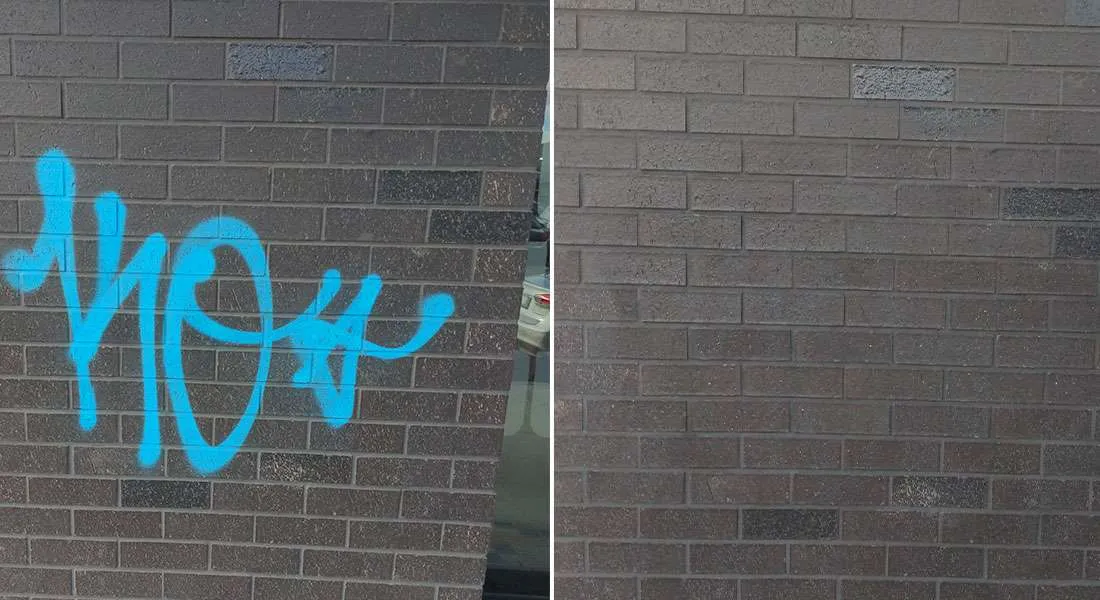
Graffiti vandalism is a persistent problem for Auckland businesses. Auckland Council records show over 70,000 graffiti incidents were reported across the region in a single financial year, and commercial properties are consistently among the most targeted.
Each incident means either the cost and disruption of removal or the reputational damage of leaving it in place. Anti-graffiti coating changes that equation by making removal faster, cheaper, and less damaging to the surface beneath.
What Is Anti-Graffiti Coating?
Anti-graffiti coatings in Auckland are specialist surface treatments applied to exterior walls, fences, gates, and other structures to prevent spray paint and markers from bonding with the substrate. The coating creates a barrier that allows graffiti to be removed quickly without the abrasive methods that damage unprotected surfaces.
Available in clear and coloured variants, clear coatings preserve the original appearance, while coloured options double as a surface finish.
According toAuckland Council, rapid removal is the most effective deterrent against repeat graffiti vandalism, and graffiti protection coating is the most practical tool for achieving that on commercial properties.
How Anti-Graffiti Coatings Work
Anti-graffiti paint creates a low-adhesion surface layer so spray paint sits on the coating rather than bonding with the material beneath. Removal uses water or a mild solvent to lift graffiti cleanly, without the high-pressure abrasives or chemicals that would damage an unprotected surface.
Surfaces where graffiti disappears quickly are also less likely to be repeatedly targeted.
Types of Anti-Graffiti Coatings Available
Two main coating types are available, each suited to different surface conditions and maintenance requirements.
Sacrificial Coatings
Sacrificial coatings are water-based formulations removed along with the graffiti using water, then reapplied. They are the preferred choice for heritage buildings and porous surfaces such as brick and natural stone because they are reversible and do not permanently alter the surface appearance.
Permanent (Non-Sacrificial) Coatings
Permanent coatings, typically polyurethane- or epoxy-based, remain on the surface after graffiti is removed with an appropriate solvent. These suit high-traffic commercial building coating applications, smooth masonry, and metal structures where frequent recoating would be impractical.
Benefits of Coating Your Commercial Building
Anti-graffiti coating benefits commercial property owners across several practical areas.
- Faster graffiti removal in Auckland, reducing the window of visible vandalism
- Lower removal costs compared to abrasive methods on unprotected surfaces
- Reduced surface damage from repeated cleaning
- Protection against staining from paint and markers
- A deterrent effect through rapid removal discouraging repeat attacks
Best Surfaces for Anti-Graffiti Protection
Anti-graffiti coatings can be applied across a range of commercial surfaces. Surface type determines the most appropriate coating formulation.
| Surface | Best Coating Type |
|---|---|
| Brick and natural stone | Sacrificial coating preferred |
| Rendered masonry | Either type, depending on texture |
| Concrete panels | Permanent coating preferred |
| Metal fences and gates | Permanent coating preferred |
| Timber fencing | Sacrificial coating preferred |
| Painted masonry | Either type, depending on existing finish |
Maintaining a Coated Surface After Graffiti Removal
A coated surface requires minimal maintenance but benefits from a consistent approach after each incident.
- Remove graffiti as soon as it appears
- Use only the cleaning method specified for the coating type
- Reapply sacrificial coatings promptly after each removal
- Inspect annually for wear or breakdown
- Avoid high-pressure water blasting, which can degrade some coatings
Signs Your Building Could Benefit From Coating
Several indicators suggest anti-graffiti coating is a worthwhile investment for a commercial property. If more than one applies, the cost of coating is likely to be recovered within a few removal cycles.
- Graffiti or tagging has required removal more than once
- The building faces a main road or high foot-traffic area
- Exterior surfaces are brick, render, or metal
- Removal costs are recurring and increasing
Auckland Premium Painters applies anti-graffiti paint and protective coatings to residential and commercial properties across Auckland, offering clear and coloured options for a range of surface types. For a free quote, call 021 253 4747 or email info@aucklandpremiumpainters.co.nz.
Frequently Asked Questions
Does Anti-Graffiti Coating Change the Look of a Wall?
Clear anti-graffiti coatings are virtually invisible once dry and do not significantly alter the appearance of the surface. Coloured coatings act as a surface finish and will change the appearance. The choice between clear and coloured depends on the substrate condition and whether a colour change is acceptable or desirable.
Can Anti-Graffiti Coating Be Applied to Brick and Concrete?
Yes. Both brick and concrete are suitable substrates for anti-graffiti coating. Sacrificial coatings are generally preferred for brick and natural stone because they can be removed non-invasively. Permanent coatings are more commonly used on smooth concrete panels and other dense surfaces.
How Is Graffiti Removed From a Coated Surface?
On sacrificial coatings, graffiti is removed with water, which takes the top layer of the coating with it. The coating is then reapplied. For permanent coatings, an appropriate solvent is used to dissolve the graffiti without breaking down the underlying coating. High-pressure abrasive methods should not be used on coated surfaces.
Is Anti-Graffiti Coating Suitable for Heritage Buildings?
Yes, with appropriate product selection. Sacrificial coatings are generally the preferred choice for heritage buildings because they are water-based, reversible, and do not permanently alter the surface. Permanent coatings can be used on some heritage surfaces but require careful assessment to ensure compatibility with the substrate.


Comments are closed.